Conferences
2026 Conference: Conrad E. Wright Research Conference on Reconstruction
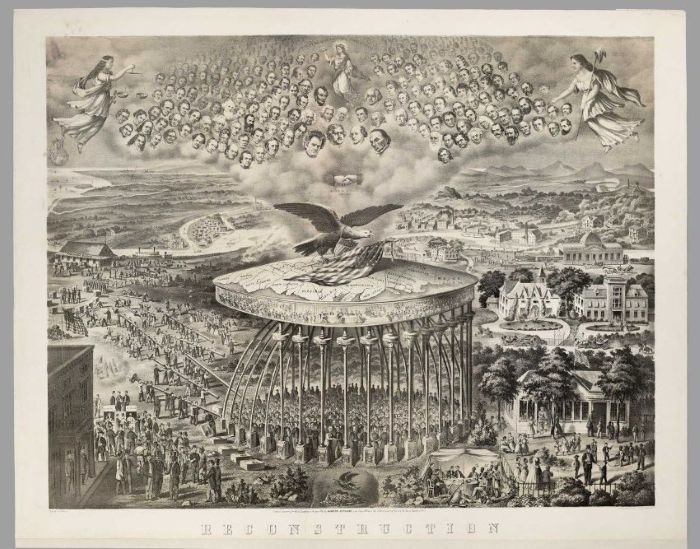
The Conrad E. Wright Conference series was endowed by The Honorable Levin H. Campbell in honor of Conrad Edick Wright, former Director of Research and Sibley Editor.
June 25-26, 2026
About
This conference will bring together scholars to explore the broad themes associated with Reconstruction such as labor, legal issues, trans-national histories and comparisons, expansion, and memory, among others.
The conference (panels and presentations) will take place at the Massachusetts Historical Society and Suffolk University in Boston on 25-26 June 2026.
Registration
Registration is required for each day of the conference.
Registration: 25 June in person
Registration: 26 June in person
Graduate students attend for free. Please email Associate Director of Research Cassie Cloutier (ccloutier@masshist.org) and note which days you wish to attend.
Schedule
Thursday, 25 June 2026
Massachusetts Historical Society, 1154 Boylston Street, Boston
3:00-4:30 pm
Registration/Reception, Dowse Library
4:30-5:45 pm,
Keynote Panel, Red Room
• Manisha Sinha, University of Connecticut
• Michael Vorenberg, Brown University
• Moderated by Rachel Shelden, Penn State
Friday, 26 June 2026
Suffolk University, Sargent Hall, 120 Tremont Street, Boston
9:00-10:15 am
Teacher Plenary Session, Room 295
- Tanisha L. Milton, TechBoston Academy
- J. Malcolm Cawthorne, Public Schools of Brookline METCO Director; formerly of Brookline High School
- Rachel Williams-Giordano, Cambridge Rindge and Latin School
10:15-10:30 am
Break
10:30-11:45 am
Panel 1: Legal History, Room 285
- “Private Law, Race, and Adjudication in the Freedmen’s Bureau Courts”
Jeanine Alvarez, University of Pennsylvania - “The Power of the Purse and the Power of the Pardon: The Administration of Property Restoration in Andrew Johnson’s Treasury Department”
Cynthia Nicoletti, University of Virginia - “Rights and Duties in the Political Thought of John Mercer Langston”
Peter Wirzbicki, Princeton University
Commenter: Leslie S. Rowland, University of Maryland
Panel 2: Reconstruction International, Part 1: Mexico & the Caribbean, Room 295
- “Antislavery Imperialism and the Politics of Reconstruction"
Gerard Llorens DeCesaris, Princeton University - “Sovereignty, Citizenship, and Constitutional Transformation in 19th Century North America"
Sarah Rodriguez, Florida Gulf Coast University - “Missionary Nation: Republican Visions of U.S. Foreign Policy after the Civil War"
James Shinn, University of South Carolina Beaufort
Commenter: Evan Rothera, Sam Houston State University
11:45 am-1:30 pm
Lunch
1:30-2:45 pm
Panel 3: Into the West, Room 285
- “Beyond ‘Rehearsals’ and ‘Experiments’: Forcible Relocation, Finality, and Freedpeople's Ordeals in Texas"
Mycah Conner, Boston College - “Chasing Reconstruction’s Promise in Alaska: The Experiences of Two USCT Civil War Veterans"
Hilary Green, Davidson College - “The (Pacific) Rehearsal for Reconstruction: How New England Abolitionists Built an Empire in Hawai’i"
Guy Emerson Mount, Wake Forest University
Commenter: Megan Kate Nelson, historian and writer
Panel 4: What If?, Room 295
- “Had Lincoln Lived: The First 284 Days of Reconstruction"
Patrick Rael, Bowdoin College - “Historians Reconstruction of Reconstruction: How Changing the Chronological and Geographical Definitions of Reconstruction Reshapes Scholarly Interpretations"
Andrew L. Slap, East Tennessee State University - “Rewriting Reconstruction: Counterfactuals and Memory in the Postbellum United States"
Ella Starkman-Hynes, Yale University
Commenter: Chandra Manning, Georgetown University
2:45-3:00 pm
Break
3:00-4:15 pm
Panel 5: Reconstruction International, Part 2: Age of Empire, Room 285
- “From Petersburg to Panama: Nathan Appleton Jr. and the Imperialist Legacies of the American Civil War"
Andre Fleche, Castleton University - “How U.S. Reconstruction Shaped the Brazilian Plan for Black Disfranchisement, 1867-1881"
Samantha Leigh Payne, College of Charleston - “The Reconstruction of the Global South: American Capital and Expertise in the Age of Empire"
Roberto Saba, Wesleyan University
Commenter: Aaron Sheehan-Dean, Louisiana State University
Panel 6: On the Ground with Reconstruction, Room 295
- “The Resumption of the Arms Trade and The End of Reconstruction"
Kate Birkbeck, Yale University - “Between the Edges of Community: Women and Social Networks of Violence in Reconstructions Georgia"
Amanda Huse, University of California Santa Cruz - “Labor and the Currency Question During Reconstruction"
Isobel Plowright, Vassar College
Commenter: Ryan Quintana, Wellesley College
1775: A Society on the Brink of War and Revolution
April 10-11, 2025
Learn more here or view the program below.
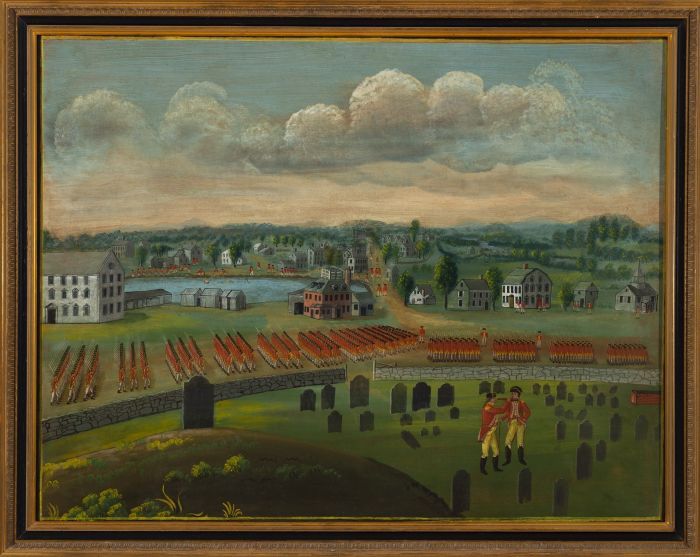
Header Image: A View from the Town of Concord, by Timothy Martin Minot. Massachusetts, about 1825. Concord Museum Collection, Bequest of Mrs. Stedman Buttrick, Sr.; Pl414.
Racial Histories of Higher Education in New England: A Symposium Co-Hosted by The New England Quarterly
September 27, 2024
Learn more here.
2024 Conference: Conrad E. Wright Research Conference on Citizenship
The Conrad E. Wright Conference series was endowed by The Honorable Levin H. Campbell in honor of Conrad Edick Wright, former Director of Research and Sibley Editor.
July 11-13, 2024
Program
About
The centennial of both the Indian Citizenship Act of 1924 and Immigration Act of 1924 offers an opportunity to explore the intersection of two subjects that have not always been considered alongside each other. However, as both scholars of Native American and U.S. immigration history grapple with the legacies of settler colonialism in their respective fields, the links between the aforementioned pieces of legislation come into clearer focus. Recent scholarship points out that the “peopling” of the United States not only occurred through the forces of international migration, but also reflects the incorporation of Indigenous peoples, forced or enslaved migrants from Africa and elsewhere, and the movement of borders that turned people into newcomers regardless of whether or not they actually moved. The degree to which those groups were included or excluded from citizenship, cultural “membership,” or even the right to remain in the nation has however varied widely. This conference will bring together scholars to explore the broad themes associated with citizenship and other variations of national belonging reflected in both the pieces of landmark legislation featured here.
The conference and workshop will take place at the Massachusetts Historical Society and Suffolk University in Boston on 11-13 July 2024. The panels and presentations will take place on 11-12 July with the teacher workshop on 13 July.
Conference Steering Committee
- Prof. Danielle Battisti, University of Nebraska Omaha
- Prof. Sunu Kodumthara, Southwestern Oklahoma State University
- Prof. Benjamin Railton, Fitchburg State University
- Prof. Brenden Rensink, Brigham Young University
- Dr. Elyssa Tardif, Massachusetts Historical Society
- Dr. Lila Teeters Knolle, Historic New England
- Prof. Marcia Zug, University of South Carolina School of Law
Registration
Registration is required for each day of the conference.
Graduate students attend for free. Please email Assistant Director of Research Cassie Cloutier (ccloutier@masshist.org) and note which days you wish to attend.
Schedule
Thursday, July 11
Massachusetts Historical Society, 1154 Boylston Street, Boston
3:00-4:30pm
Registration/Reception, Dowse Library
4:30-5:45pm,
Keynote Panel, Red Room
- Maurice Crandall, Arizona State University
- Samantha Seeley, University of Richmond
- Kunal M. Parker, University of Miami
Moderator: Sunu Kodumthara
Friday, July 12
Suffolk University, Sargent Hall, 120 Tremont Street, Boston
9:00-10:15am
Panel 1, Room 235
- “Modern Citizenship, the 1924 Immigration Act, and the Sociology of Exclusion”
Cheryl Hudson - “Seeing Like a State and Being Like a Race: The 1924 Indian Citizenship Act and the 1924 Immigration Act"
James Pasto - “Race, Sovereignty, and the Multiple Meanings of Birthright Citizenship in the 1920s”
Rachel Rosenbloom
Commenter: Lila Teeters Knolle
10:15-10:30am
Break
10:30-11:45am
Panel 2, Room 285
- “The Slave Trade and the Naturalization Act of 1790”
Cody Nager - “To Claim a River: The Upper Mississippi in the Early Nineteenth Century"
Karl Nycklemoe - “Native Americans and State Citizenship in the Deep South, 1830-1865”
Edward Green - “Legible Citizenship: A Comparative Study of African American and Cherokee Constitution Writing in the Antebellum Period”
Alison Russell
Commenter: Barbara Krauthamer
Panel 3, Room 235
- “From Syria to Spruce: The impact of the Syrian Diaspora on the formation of Appalachia”
Abigail Smith - “‘All The Reliable Loyal citizens Heare are the Slaves’: Citizenship in the Popular Imagination in the Civil War America”
Olga Tsapina
Commenter: Benjamin Railton
11:45am-1:30pm
Lunch
1:30-2:45pm
Panel 4, Room 285
- "Passports to Citizenship?"
Emily Yankowitz - “Statuses and Sovereignties: Undocumented Peoples, State-Recognized Tribal Geographies, and the U.S.’s Identification Policies”
Kris Klein Hernández - “Gendered Contradictions and the Women Who Made Citizens”
Sara Egge
Commenter: Kunal Parker
Panel 5, Room 235
- “Mound Builder, Cliff Dweller, Indian: Imagining American Antiquity and Indigenous Membership in the Nation”
Justin Estreicher - “U.S. Policies and Native Sovereignty in the Century Before Citizenship”
Daniel Mandell - On the Massachusetts Seal
Lydia Burleson
Commenter: Brenden Rensink
2:45-3:00pm
Break
3:00-4:15pm
Panel 6, Room 235
- “‘A Destructive and Injurious Weapon in Nature’: The 1924 American Indian Citizenship Act and its Use in Undermining Iroquois-American Diplomacy”
Alexander Echelman - “Native Nations against State Taxation in the Nineteenth Century”
Emilie Connolly - “Indian Jail, Immigrant Jail: Contested Citizenship and the Foundations of the Carceral State”
Brianna Nofil
Commenter: Marcia Zug
Saturday, July 13
Massachusetts Historical Society, 1154 Boylston Street, Boston
Teacher Workshop
K-12 Teacher Workshop
As an organization that operates within academia and the public history arena, the Massachusetts Historical Society both champions important scholarship and supports vital public history initiatives like professional development for K-12 instruction. This conference will serve both constituencies—scholars and K-12 educators—by providing a platform to consider how the classroom serves as a key site of historical representation. Teachers will be invited to attend the traditional academic sessions, and scholars in turn will be invited to participate in a concluding teacher workshop at the end of the conference. We encourage participation from scholars who are eager to engage with and learn from K-12 educators, as well as teachers who are looking to incorporate the latest scholarship into the classroom. Learn more here.
2023 Conference: Empire and its Discontent, 1763-1773
December 1-2, 2023
Program
About
The David Center for the American Revolution at the American Philosophical Society and the Massachusetts Historical Society intend to host a conference on the theme “Empire and Its Discontent” at the Massachusetts Historical Society on December 1 and 2, 2023. This conference is part of a series of interdisciplinary and international meetings designed to re-examine the origins, course and consequences of the American Revolution. Our 2023 meetings mark the 260th anniversary of the Treaty of Paris that ended the Seven Years’ War and the 250th anniversary of the Boston Tea Party. We intend to use this gathering to examine the British empire at its moment of great triumph, in 1763, with its enemies defeated and its control spreading from India to the Mississippi; and again at 1773, with its control beginning to slip away in North America as a radical mobilization began against imperial power.
Registration
There is no fee, but registration is required. To attend, please email Assistant Director of Research Cassie Cloutier (ccloutier@masshist.org) to be added to the registration list. Please also note which days you wish to attend and any dietary restrictions you may have.
There is limited space for Day 1 of the conference and we are currently at capacity for Day 2 of the conference. If you would like to be placed on the waitlist, please e-mail Cassie Cloutier (ccloutier@masshist.org). If space becomes available, we will contact the names on the list on Thursday, November 30.
Schedule
Friday, December 1
3:30-4:45pm
Panel 1: Imperial Administration
- “Neither Prologue nor Insurmountable Crisis: Federalism, Settler Colonialism, and Empire in the Stamp Act Crisis”
Andrew Shankman, Rutgers University - “The ’45 in 75: Conspiracy, Imperial Policy, and the Rebellious Turn in the American Revolution”
Tanner Ogle, Texas A&M University - “Imperium in imperio: Competing Authority in Colonial Governance and Policy”
Rachel Banke, University of Illinois
Moderator: Frank Cogliano, University of Edinburgh
5:00-6:00pm
Opening Reception
6:00-7:00pm
Opening Keynote: Could the Empire Have Been Saved?
- Serena Zabin, Carleton College
- Patrick Griffin, Notre Dame
- Christopher Brown, Columbia University
Moderator: Brendan McConville, Boston University
Saturday, December 2
9:00-9:15am
Welcome
9:15-10:30am
Panel 2: Global Margins and Peripheries
- “The American Revolution and Ireland in the Parliamentary Debates c 1764-1776”
Nicole Maib, Brunel University London - “Border-sea Colonists’ Influence and Imperial Security Policy in the British Atlantic, 1763-1773”
Ross Nedervelt, Florida International University - “The Proclamation of 1763 in the Caribbean”
Heather Freund, The Saxo Institute
Moderator: Eliga Gould, University of New Hampshire
10:30-11:00am
Break
11:00-12:15pm
Panel 3: Fringes and Frontiers
- “'Bewilderment' as a Way to Interpret Empire and its Discontents”
Robert Parkinson, Binghamton University - “Rethinking the Royal Proclamation of 1763 across Time and Space”
Helena Yoo Roth, City University of New York - “'One Spoon & one Knife to eat all together:' Indigenous Ecologies and the Environmental Limits of Empire, 1759-1774”
Loren Michael Mortimer, Emory University
Moderator: Kate Grandjean, Wellesley College
12:15-1:30pm
Lunch
1:30-2:45pm
Panel 4: Commerce, Culture, and its Discontent
- “Remaking the Empire's Built Environment: Architecture and Governance in the Aftermath of the Treaty of Paris, 1763-1770”
Christian Koot, Towson University - “Cultivating Revolution: Danish St. Croix, Anglophone Enslavers, and the Imperial Crisis”
Jared Hardesty, Western Washington University - “A Revolution Brewing: The Boston Tea Party as a Catalyst for Culinary Change”
Nancy Siegel, Towson University
Moderator: Zara Anishanslin, University of Delaware
2:45-3:00pm
Break
3:00-4:00pm
Wrap up / Spilling the tea with:
- Jack Rakove, Stanford University
- Mary Beth Norton, Cornell University
Moderator: Patrick Spero, George Washington Presidential Library, Mt. Vernon
Conference Publications
Since its first conference volume on American Unitarianism, issued in 1989, the MHS has made the scholarship developed through its conferences widely and permanently available to the field.
The MHS publication series Studies in American History and Culture comprises many of these volumes. More recently, MHS conference volumes published by other presses have given our conference scholarship an even wider reach. Peruse these essay collections.
Past Conferences
Learn more about past conferences here.
